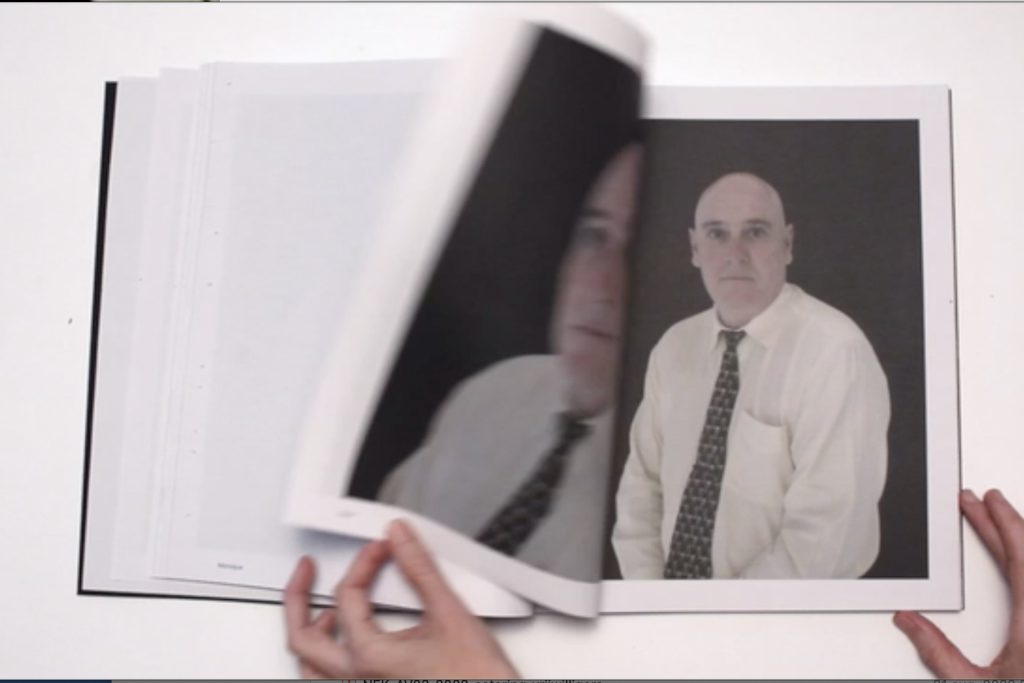
The Spectators

Series made between 2015 and 2024 on the occasion of residency project CALAMITA/À, curated by Gianpaolo Arena and Marina Caneve.

Published in CALAMITA/À. An investigation into the Vajont catastrophe, Fw:Books, 2024

The Spectators focuses on the residents of the small commune of Erto and Casso, who witnessed the Vajont tragedy from their homes; On 9 October 1963, almost two thousand people lost their lives overwhelmed by a gigantic wave of water and mud caused by a huge landslide that fell into the hydroelectric basin of Vajont, […]

more

CALAMITA/À. An investigation into the Vajont catastrophe.

23 x 31 cm / 512 pages / Artists: Gianpaolo Arena, Marina Caneve, Céline Clanet, François Deladerriere, Petra Stavast, Jan Stradtmann /  Essays by Olga Smith, Alessandra Prandin, Marcelline Delbecq, Perrine, Lamy-Quique, Roberta Agnese, Eugénie Shinkle, Gianpaolo Arena and Marina Caneve / Design: Hans Gremmen

Published by Fw:Books, 2024
Fw:Books/Calamita

more

CALAMITA/À. An investigation into the Vajont catastrophe

23 x 31 cm / 512 pages / softcover / Artists: Gianpaolo Arena, Marina Caneve, Céline Clanet, François Deladerriere, Petra Stavast, Jan Stradtmann / Essays by Olga Smith, Alessandra Prandin, Marcelline Delbecq, Perrine, Lamy-Quique, Roberta Agnese, Eugénie Shinkle, Gianpaolo Arena and Marina Caneve / Design Hans Gremmen / Published by Fw:Books / 2024

Info/order
Calamita/à Project

more

Shibboleth — Banff Centre, Residency

Booklet as part of Emic Units #1.
Published and designed by Shibboleth / layout by Elisa Mapelli / printed by Nava Press Milan / 2023 / English / softcover / edition of 300 / A5 / 32 pages.

Shibboleth Emic Units #1 contains of 50 exercise books by 50 different authors. Intended as working tools for teachers and educators, the 32-page booklets offer prompts for an education of the gaze from photographic training to image-reading passing through critical approaches to the politics of representation and the ecology of images.

shibboleth.page

more

In the middle, between us, infinite possibilities

by Laura De Marco

Petra Stavast is an artist who, over a more than twenty-year career, has used her practice to explore one of photography’s quintessential aspects: the encounter with the other, with someone beyond oneself. She has done so with the remarkable intuition of someone who knows where to look for those universal elements that connect all personal life stories—family ties, interpersonal relationships, life’s unexpected turns, the ongoing search for self. She recognizes in seemingly insignificant details or events the potential to construct a narrative far more relevant and complex than even its protagonists might realize. Her external gaze is both sensitive and eager to understand these stories, to investigate and return them, project after project, in a continuous outward-looking process that ultimately informs her own existence.

Excavating personal photographic archives and portrait photography are fundamental elements of Stavast’s artistic practice, alongside extensive research to determine the best approach to reconstructing the complexity of the protagonists in the stories she dedicates herself to. Two key projects exemplify this approach: Libero (Roma Publication, 2009) and Ramya (Roma Publication, 2014)—both titled after individuals. These works are lengthy, intricate journeys into the lives of Libero Greco, the son of post-war Italian immigrants from Calabria to the United States, and Anneke, a Dutch woman better known as Ramya, whose turbulent past shaped an unusual life.

However, with Stavast’s latest work—exhibited within the walls of Spazio Labo’ and published by Roma Publication in 2022—something different occurs. Even from the title, there is a marked shift in approach: S75, an impersonal and ambiguous code that seems to lack a personal dimension. And yet, even here, there is an implicit reference to a potential proper name. Who or what is S75?
The Siemens S75 was the first mobile phone with an integrated camera that Stavast ever used—an instrument seemingly far removed from her artistic practice, which has always favored medium and large-format analog photography. She encountered it almost by chance in 2005, when Siemens sent her a test model. Initially skeptical of the tiny device, she began using it while working in China, taking portraits of the people she traveled with. Despite her reluctance and confusion toward such a small and seemingly inadequate digital tool—with a maximum resolution of just 1280×960 pixels, even then considered problematic for a photographer of her caliber—she realized upon returning to the Netherlands that something new and particular had emerged from those sessions.

Due to the limitations of the device, it was impossible to take portraits in bright light. As a result, the sessions took place in intimate, dimly lit settings, and the ten-second self-timer—set by Stavast for greater image stability—became the most significant part of the process. In those ten seconds, Stavast discovered an almost magical quality, a transformative power for both herself and the person in front of her. This marked the beginning of S75 as a long-term project involving at least 244 people over fifteen years, in different parts of the world.
The series of images in S75 forms a human landscape composed of faces, emerging from darkness at varying proximities—some almost ghostly, yet all vividly present. Each person responds to those ten seconds of waiting before the automatic shutter clicks, with the simple expectation of saying, “Here I am” to the tiny camera before them.
Here lies the essence of photography for Petra Stavast: a process, a ritual, a practice that immerses us in the individual complexity and beauty of human existence—even within the span of just ten seconds.

With S75, there is a shift from seeking encounters retrospectively—recovering archives, memories, and testimonies, where the living recount the lives of the dead—to immediate and tangible contact with her subjects. Stavast moves from a photography that dialogues with pre-existing images to a direct, serial, and repetitive practice—pure gesture, sheer joy of the act.
For Stavast, this step was necessary as a photographer. What appears to be an exercise in style is, in fact, a profound and unexpected test of her understanding of photography as a medium and of that crucial moment of exchange between the person holding the camera and the one being portrayed and, in some way, narrated.

It is particularly significant that this transition occurred through a rejection of traditional photographic formality and fine art photography in favor of immediacy, unpredictability, and the inherent randomness of the most ephemeral digital photography technology: the mobile phone.
This time, Stavast places herself directly within the work, sharing a confined space—both physically (her improvised studios in Amsterdam, Banff, and Shanghai) and temporally—with her subjects. She is vulnerable in front of them, equipped with only minimal gear, seeking to meet people more literally, quickly, and directly—people who fascinate her and in whom she recognizes the narrative potential that defines her gaze.If this time the project’s title references the object that mediates the relationship between people—the photographic instrument—rather than the people themselves, it is because of the emphasis on process over outcome.

A process that Stavast tests on herself as well, occasionally taking self-portraits in the few minutes before a subject arrives. She does so to place herself in their position, to understand their discomfort, fear, fragility, stiffness, or willingness to share something of themselves—or even just the illusion of doing so. Because ultimately, when flipping through S75, we do not truly know whom we are looking at. We see only names accompanying these faces, but perhaps, through them, we can recognize a collective we, or even a glimmer of ourselves.

The limitations of photographic technology are a central part of S75 because they force Stavast to relinquish control over the shooting process and, consequently, any expectations of the results. The portraits are shaped by circumstance—light, interaction, and, above all, the camera-phone itself.
Gone are the hallmarks of Stavast’s previous work—layered visual languages, a multiplicity of image sources, and interactions with text—yet the power of experimentation remains. No two poses are identical, no single vision emerges, but rather a chorus of diverse experiences and expressions, each responding differently to this intimate encounter in which both photographer and subject are equally involved and vulnerable.

There is also an inherent contradiction between the immediacy of digital photography and the way these images seem to elude reality. The portraits are “flawed” by missing pixels and shifting color tones, their low quality softening the harshness of reality, acting almost as a filter. In this regard, the decision to print the S75 book using rotogravure printing is a masterstroke—by saturating the thin paper with ink, the technique absorbs digital “imperfections” and creates an almost painterly, abstract effect. This process enhances the images’ grainy texture and lends them a diffused glow, situating them in a timeless dimension seemingly at odds with the rapidity of their creation. The portraits in S75 resemble those from the Dutch Golden Age of painting—once again, an unexpected revelation at the heart of Petra Stavast’s refined artistry.

We spoke of a change in approach for the Dutch artist, but perhaps it is simply a shift in perspective: rather than working with pre-existing material, she begins constructing a new, personal archive—one built from the multiplicity of individuals who, in different ways, inhabit our everyday lives. She forces an encounter through the mediation of photography because it is precisely in that in-between space, between us, that infinite possibilities can arise.

spaziolabo.it


more

In mezzo, tra di noi, infinite possibilità

by Laura De Marco

Petra Stavast è un’artista che nel corso di una più che ventennale carriera ha usato la sua pratica per indagare uno degli aspetti quintessenziali della fotografia: l’incontro con l’altro e l’altra da sé. L’ha fatto a partire dal formidabile intuito di chi sa dove cercare quegli aspetti universali che accomunano tutte le storie di vita personali, come i legami familiari, i rapporti interpersonali, gli incidenti di percorso, la costante ricerca di sé; di chi sa riconoscere in dettagli o avvenimenti apparentemente insignificanti la possibilità di costruire la narrazione di una storia molto più rilevante e complessa di quanto i suoi stessi protagonisti possano credere, perché il suo sguardo esterno è sensibile e bisognoso di conoscere quelle storie, investigarle e restituirle, per poter costruire, progetto dopo progetto, attraverso questo continuo guardare fuori per riportare dentro, un filo conduttore anche per la propria esistenza.

Lo scavo in archivi fotografici personali e la fotografia di ritratto sono elementi caratterizzanti del lavoro artistico di Stavast, insieme a una profonda attività di ricerca per comprendere la chiave di lettura e le modalità più adatte per ricostruire la complessità dei protagonisti e delle protagoniste delle storie a cui si è dedicata. Due progetti sono fondamentali a tal proposito, Libero (Roma publication, 2009) e Ramya (Roma publication, 2014) – non a caso nomi di persona come titoli –, entrambi viaggi lunghi e articolati alla scoperta di quanto ancora esiste ed è importante recuperare delle vite di Libero Greco, figlio di una storia di immigrazione dalla Calabria agli Stati Uniti nell’immediato secondo dopoguerra, e di Anneke, una donna olandese meglio nota come Ramya, dalla vita turbolenta e dal passato inusuale.

Ma con l’ultimo lavoro di Stavast, quello esposto tra le mura della galleria di Spazio Labo’ e pubblicato dalla casa editrice Roma publication nel 2022, succede qualcosa di diverso, che già dal titolo segna un cambio di approccio rispetto alla produzione precedente: S75, una sigla asettica e ambigua che spiazza per l’apparente assenza di una componente personale.

Eppure, anche in questo caso c’è in qualche modo un rimando a un possibile nome proprio. Chi o cosa è “S75”? Il Siemens S75 è il primo telefono cellulare dotato di fotocamera integrata che Stavast abbia mai usato, uno strumento apparentemente lontanissimo dalla sua pratica di artista che da sempre predilige i medi e grandi formati della fotografia analogica, e con cui entra in contatto quasi per caso quando, nel 2005, la compagnia Siemens gliene invia un modello in prova. Stavast inizia a usarlo durante un periodo di lavoro in Cina, per fare ritratti alle persone in viaggio con lei, e nonostante l’iniziale riluttanza e confusione verso quel minuscolo oggetto – considerato oggi obsoleto, con una fotocamera dalla risoluzione massima di 1280×960 pixel, e anche all’epoca piuttosto problematico da usare per una fotografa col suo approccio –, al suo rientro in Olanda si rende conto che qualcosa di nuovo e particolare è emerso da quelle sessioni di scatto con l’apparentemente inadeguato strumento digitale.

Quei ritratti, impossibili da fare in piena luce a causa della scarsezza tecnologica del mezzo, si sono trasformati in sessioni di incontro nell’intimità del semibuio, in cui i dieci secondi del timer dell’autoscatto – impostato da Stavast per cercare una maggior stabilità d’immagine – si sono rivelati l’aspetto più importante del processo. In quei dieci secondi, infatti, Stavast intuisce l’aspetto quasi magico, di potenza trasformativa per lei e la persona di fronte a lei, che segna l’inizio di S75 come progetto a lungo termine che ha visto coinvolte almeno duecentoquarantaquattro persone in quindici anni di lavoro, in diverse parti del mondo.

La serie di immagini presenti in S75 crea un paesaggio umano fatto di volti, a distanza più o meno ravvicinata, che emergono dal nero, in alcuni casi con un’apparenza quasi fantasmatica, eppure tutti vivissimi: tutte le persone rispondono a quei dieci secondi di attesa prima dello scatto automatico con l’unica aspettativa di dire “eccomi, ci sono” alla minuscola macchina fotografica davanti a loro.
Ecco il cuore di ciò che è la fotografia per l’artista olandese: un processo, una liturgia, una pratica che ci fa immergere nella individuale complessità e bellezza dell’essere umano. Anche nell’arco di soli dieci secondi.

Dai lavori precedenti a S75 c’è il passaggio dalla ricerca di un incontro a posteriori – ritrovamento di archivi, recupero di memorie e testimonianze, persone vive che rievocano la vita di persone morte – a un contatto immediato e tangibile con i propri soggetti; da una fotografia che si interfaccia sempre con immagini già esistenti e dialoga con esse, a una pratica diretta, seriale e ripetitiva, mera prassi, pura gioia del gesto.

Un passo necessario per Stavast stessa in quanto fotografa: un apparente esercizio di stile con risvolti profondi e inaspettati per mettere alla prova la solidità del suo pensiero sul mezzo fotografico e su quel momento fondamentale di scambio che intercorre tra una persona con un dispositivo fotografico e un’altra che da quel dispositivo si fa ritrarre e , in qualche modo, raccontare. È quanto mai significativo che questo passaggio sia avvenuto attraverso la rinuncia alla formalità della tecnica fotografica tradizionale, della fotografia fine art tout court, per abbracciare l’immediatezza, l’incontrollabilità e dunque l’aleatorietà della più passeggera delle tecnologie fotografiche digitali, quella cellulare.

Stavast si inserisce questa volta in prima persona nel suo lavoro, condividendo uno spazio angusto, sia fisico – lo studio fotografico improvvisato nella sua Amsterdam e a Banff e Shanghai – che temporale, col suo corpo e con la leggerezza di una attrezzatura minima che la lascia vulnerabile di fronte ai suoi soggetti, per incontrare in maniera più letterale, veloce e diretta le persone da cui è affascinata e nelle quali riconosce quel potenziale narrativo che contraddistingue il suo sguardo.

Se questa volta il titolo del progetto vira sull’oggetto che mette in relazione le persone attraverso il loro reciproco guardarsi, ovvero lo strumento fotografico, e non sulle persone stesse, è proprio per la centralità del processo sul risultato. Processo che l’artista stessa mette alla prova realizzando di tanto in tanto, nei pochi minuti a disposizione prima dell’incontro con una persona da fotografare, degli autoritratti come per mettersi nei panni di chi poserà di fronte a lei, per capirne l’imbarazzo, la paura, la fragilità, la rigidità, la volontà di condividere qualcosa di sé, o anche solo l’illusione di farlo. Perché in fondo, sfogliando le immagini di S75 non sappiamo chi stiamo guardando, leggiamo solo i nomi di persona che appartengono a questi volti, ma forse possiamo, attraverso di loro, riconoscere un noi collettivo o anche solo un barlume di noi.

I limiti della tecnologia fotografica sono parte centrale di S75 perché fanno sì che l’immediatezza della sessione di scatto faccia perdere ogni sorta di controllo all’artista e dunque anche ogni aspettativa sui risultati: sono di volta in volta le circostanze – la luce, la relazione e soprattutto il telefono-macchina fotografica – a creare il ritratto. Non ci sono più gli elementi caratteristici dell’opera di Stavast – come la stratificazione di linguaggi, la molteplicità di fonti delle immagini, il rapporto coi testi –, eppure rimane la potenza dell’esperimento: non c’è una posa identica all’altra, non emerge una visione unica ma un coro di esperienze e atteggiamenti diversi di centinaia di esseri umani che reagiscono ogni volta in modo diverso a un incontro a due in cui entrambe le parti sono ugualmente coinvolte e vulnerabili.

C’è anche una sorta di contraddizione tra l’immediata disponibilità delle immagini digitali e il loro aspetto che sfugge completamente alla realtà: i ritratti sono “rovinati” dai pixel mancanti e dalle sfumature di colore, la qualità inferiore ammorbidisce la durezza del dato reale, fungendo quasi da filtro per esso. Sapiente da questo punto di vista la scelta di produrre il libro S75 attraverso la stampa rotocalco, che grazie alla quantità di inchiostro rispetto alla leggerezza del supporto assorbe i “difetti” digitali delle immagini e crea un effetto quasi pittorico, astratto, esaltando l’aspetto granuloso delle fotografie e conferendo loro una luce soffusa che le situa in una atemporalità apparentemente in contrasto con la velocità del processo. I ritratti di S75 hanno l’apparenza di quelli dei quadri del Secolo d’oro della pittura olandese, ancora una volta una sorpresa alla base della sapiente arte di Petra Stavast.

Un cambio di approccio per l’artista olandese, dicevamo, ma forse si tratta solo di un modo di vedere le cose da un altro punto di vista: invece che lavorare a partire da materiale altrui, iniziare a costruire un archivio nuovo, personale, a partire dalla molteplicità di individualità che in maniera diversa appartengono alla nostra sfera di vita quotidiana; forzare un incontro a partire dalla mediazione della fotografia perché è lì, in mezzo, tra di noi, che si possono creare infinite possibilità.

spaziolabo.it


more

S75: 1280 x 960 pixels

Review on the book S75
by Brad Feuerhelm

American Suburb X
2023

In a moment where technology desires to exponentially double and triple its rate of occupancy in our fevered minds with its unlimited growth prospect, followed by its unmitigated potential to cause alarm instead of vague dreams of progress, from the militarism of our economies to the pursuit of transhuman desires of biological co-habitation to furthermore nefarious possibilities of neuro-digital interfacing, one can imagine the appeal of stepping back from the future that has incessantly demanded our attention toward a time when technologies burgeoning capability seemed more like an asset than something to be ever-keenly suspicious of.

Where the exact point between our worry began and the dreams of progressive technology faded is very hard to place, but I would suggest that many of us have lived through some of it. Those of us old enough to look back at the run-up to Y2K (the implausible end of everything because of limited processors and date resetting) wonder how there could have possibly been so much ostentatious clamor regarding the moment, which was upended without so much as a whimper by the continuation of things as ever. For me, I hold the movie Maximum Overdrive, a film based on a short story by Steven King in which all forms of machines, plugged in or not, become sentient and embark on a murderous spree seeking to eliminate all human life on the planet. For others, it began with Phillip K. Dick, perhaps. It is hard to say, but there is a worn fetishism in thinking about technology, its promise of the future, and the possibility of that future being denied that works its way into the fold of our subconscious desires.

In the case of Petra Stavast, I very much doubt that the Dutch artist began her book S75 thinking about these things. At a certain point, a clear choice was enlisted to continually use an early camera phone from 2005, a technological stone age (by today’s comparison) personal device/tool with a maximum resolution of 1280×960 pixels, when other more accurate camera phones became available. This usage could result in a broader discussion about optics or nostalgia as Stavast began adapting to personal camera phones through the Siemns S75. And yet, at the heart of it, I believe that the decision to look backward and retrieve and continue making images from this low-res camera phone has more implications and asks us about our fears and hopes not only on the grounds of retro-futurism but may also be seen as a kind of stock take of our contemporary world where AI and computational imagery is very much where the discussion of where our images are heading. It is not only that the artist used the camera phone in the early 2020s, but rather that it has been a tool she has used over time, eliciting a further conversation about compatibility and human preference for technical devices and their ability to interface with our creative process.

In their low-res format, the photographs from Stavast’s phone are imperfect and grainy, and a melancholic dip is imbued in their scratchy surface. No doubt, this stems from a low-lit environment in which many of the photographs were shot. This allows the photograph to clip and show digital artifacts like noise that enhance each frame’s morose beauty. Blowing up or cropping each frame could also allow some painterly digi-pictorialism to develop. It is hard to say precisely how the artist pushed the images to their digital ends. Either way, it is purposeful, as the photographs stretch, distend, and dissolve.

In some ways, S75 feels like a strange catalog of 21st-century human typology, though it avoids making a list of Noah’s Ark types to bring along. That kind of work leads to other darker ideas about classification. Instead, the book is complete with photographs closer to the work of August Sander, whose images were made in exciting and similarly nebulous times, making his work prescient, fitting, and historically invaluable. Though we assume little information about Stavast’s sitters, one can see the work has a kinship to Sander as the work by Stavast has been completed almost 100 years between the two artists, both artists seemingly making images on the precipice of the potential for significant societal shifts to occur. Both artists are European and have launched their projects at a time when technology seems to both help and, conversely, stifle society. Things arise to question how we pursue progress while dealing with anxious outcomes. Our times are in flux, and why should our artistry not reflect this?

Again, it is essential to understand that Stavast may have been playing with anachronistic technological tendencies in the work and that perhaps it was merely an exercise in examining nearly two decades of technical history through the bulwark of using a retrograde tool such as the S75. The project was made over these two decades, suggesting a comfort with the tool. It is not simply using retro-digi-aesthetics to create nostalgia. That the artist chose to work with the phone for so long, undoubtedly doing so without access to updates or as a tool of particular convenience, is fascinating. As with all great books or works of art, I believe the implications are broader. As an audience, we might find valuable ways to channel the work into more significant discussions about our moment in time and the reflective mirror it holds up, challenging our perception of the near past, the present, and what the future may hold.

americansuburbx.com


more
Banff Centre — Residency shows the empty rooms of a 1953 administration building in Alberta, Canada the day before it was slated for demolition. Discarded accoutrements stand in for employees, whose S75 cellphone portraits appear to exist in a disjointed atemporal moment.

Banff Centre — Residency

Banff Centre — Residency shows the empty rooms of a 1953 administration building in Alberta, Canada the day before it was slated for demolition. Discarded accoutrements stand in for employees, whose S75 cellphone portraits appear to exist in a disjointed atemporal moment.

more

S75

Roma Publications #434
Design Hans Gremmen
224 pages + poster
27×32 cm + 87×70 cm

S75 is a project named after the Siemens S75, a mobile phone that was launched in 2005. It was my first phone which featured an integrated camera, with a maximum resolution of 1280 × 960 pixels. All the portraits appearing in this series were photographed using the S75 between 2006 and 2022 in Amsterdam, Banff, and Shanghai.

info
order

more

S75 – Book

Roma Publications #434
Design Hans Gremmen
224 pages + poster
27×32 cm + 87×70 cm

S75 is a project named after the Siemens S75, a mobile phone that was launched in 2005. It was my first phone which featured an integrated camera, with a maximum resolution of 1280 × 960 pixels. All the portraits appearing in this series were photographed using the S75 between 2006 and 2022 in Amsterdam, Banff, and Shanghai.
2022

info
order

more

Rongwrong – Presentation ‘On Gestures of Doing Nothing’

Collaboration with Sander Breure, Witte van Hulzen and Arnisa Zeqo.

Small exhibition on the occasion of the bookpresentation of On Gestures of Doing Nothing at Rongwrong – Space for Art an Theory – in Amsterdam.
2019

On Gestures of Doing Nothing / Sander Breure & Witte van Hulzen, Roma Publication 369

‘On Gestures of Doing Nothing’ documents a performance staged by Sander Breure & Witte van Hulzen that took place over the cours of several days in their exhibition ‘The Floor is Lava’ in Marres in Maastricht. It consisted of eleven performers presenting a series of gestures. The performance – along with the exhibition itself – was […]

more